

 Sep 25, 2025
 admin
adminThe Future of SEO with AI: Predictions for 2025 & Beyond
With search engines increasingly reliant on AI SEO, you may wonder what the AI SEO future trends look like and how you can profit from them. We see AI Overview, AI Mode, and Gemini as becoming the future of SEO with Google. Where does that leave you? Will SEO die? All of this can seem scary, especially as a business that depends on SEO.
As an SEO professional, I’ve seen how AI has begun to influence the trends in SEO, and for businesses that rely on SEO to connect the customers, the stakes have only gone up. I can tell you that SEO isn’t dying—it’s evolving. Let’s take a look at some of the AI SEO future trends you can expect.
#1 Future Trend: No More Gaming the Algorithms
Ever had a competitor beat your rank, not because they were the better choice but because they used underhanded black hat SEO tactics? Sadly, even in 2025, people can game the system, but one thing that has been changing is that the AI has made the search engines smarter. You can no longer simply stuff keywords into an article to reach the top rank.
Search engines now understand context. This has made it so that when you do SEO, knowing what the user intent was is now more important than ever before. The AI can analyze your content to determine relevance.
One example of a keyword in the past that worked well that doesn’t work as well today is “Best Coffeeshop in Denver.” In 2025, you would want to focus on answering questions if doing AI SEO because the answer engines look for specific questions.
Examples of questions you might focus on answering include:
- Where can I find the best locally roasted coffee near me?
- What are the best coffeeshops in Denver with cozy areas to read?
- What are the best coffeeshops to get work done?
Answering questions like this is doing AI SEO because it will help you to gain visibility with the answer search engines.
#2 Future Trend: AI Tool Adoption Growing
An estimated 20% of all Americans are now users of AI tools at least 10x per month, according to a study from Sparktoro. Increasingly, people continue to adopt AI tools as part of their marketing efforts and content optimization. Some of the most common things you’ll encounter AI tools for with business owners include:
- Technical SEO: Semrush is a great example of an AI SEO tool that you can use to identify your technical SEO problems by performing things like a site audit.
- Data-driven Insights: Again, Semrush would be a good tool for data-driven insights because it provides you with an all-in-one SEO tool. Another tool that can provide you with these types of insights would be Ahrefs, which provides you with insights into your backlinks and various keywords.
- Content Optimization: If you want to perform content optimization for your website, Clearscope would rank as one of the best AI tools for this. It provides you with suggestions in real-time, and you can see your content graded in real-time. You can also get insights into the content of your top competitors.
If you’d like to dive deeper into the AI SEO tools available on the market in 2025, you might head over to another article I wrote about “The Top 10 AI SEO Tools to Try in 2025.”
In the future, AI SEO tools will likely need to adapt to LLMs and channels where people search like Amazon, YouTube, and Pinterest. Most tools today are optimized for yesterday’s SERPs.
#3 Future Trend: Voice Search Usage Growing
An estimated 1 billion voice searches happen every month with 27% of people using voice search on Google, according to Huddle Creative. Because of voice search, SEO now favors long-tail keywords over short-tail keywords.
An estimated 70% of all voice searches pull answers directly from featured snippets and the “People Also Ask” section.
Not only does this have importance for the general public, but you could optimize your content for voice search to target a market like the visually impaired or those with physical disabilities. A growing number of people with disabilities use voice search.
Besides that, there’s an increasing number of people who use it for local SEO as well since someone might ask, “Hey Alexa, where’s the nearest Greek restaurant?”

When you optimize your content for voice search, you want to build your strategy around how people speak.
To make sure you’re optimized for local voice search, you want to make sure your Google business profile has the following:
- Phone number
- Local address
- Reviews
- Opening hours
- Categories
- Photos (Pro Tip: Google recommends at least 3 photos of your products/services)
You want your name, address, phone (NAP) details as the same across platforms. If Google picks up inconsistent NAP details, it will get confused and rank you lower.
#4 Future Trend: More Personalized Search Experience
In the past, if you typed in a keyword, you would see the same results as tens of thousands of other users. The keywords left little room for variation, but with AI now influencing the AI SEO future trends, one of the biggest changes has been far greater personalization.
Some of the technologies making search more personalized through AI include:
- Machine learning
- Continuous adaptation to user behavior
- Natural language processing
For example, let’s say that one user regularly chooses “Gluten-free” before searching for “food” searches. To save time, the filters would automatically prioritize those filters for future searches with gluten-free. At the same time, doing this ensures that the user will see the most relevant results first. That will likely only become more popular in the future.
Search intent is also beginning to play a role in personalized search. Let’s say that the user types in, “Buy a new car.” They might choose the area “Denver, Colorado” as a way of showing the search engines that they have a deeper intent of actually buying a car in Denver. Adding the Denver part shows transactional intent, and it also shows that a location has relevance to this search query.
In the future, more hyper personalization will take place with newer and better ways of search engines getting this information.
#5 Future Trend: AI SEO Will Play an Increasingly Bigger Role
Some believe that AI will kill traditional SEO by 2028, but in all likelihood, AI SEO isn’t going to kill traditional SEO. It will simply change the way it works. Gartner published a report that predicts AI will cause a 25% drop in search engine volume by 2026 because of AI chatbots and virtual agents.
All of this will force companies to rethink how they market themselves. Instead of going for volume, companies will increasingly rely on getting higher conversion rates with the traffic that they already have.
One of the things that many people have pointed out is that AI SEO often has a higher conversion rate because the users who click through to their website will often convert at a higher rate. In fact, it has a 23x higher rate of conversion, according to Ahrefs.
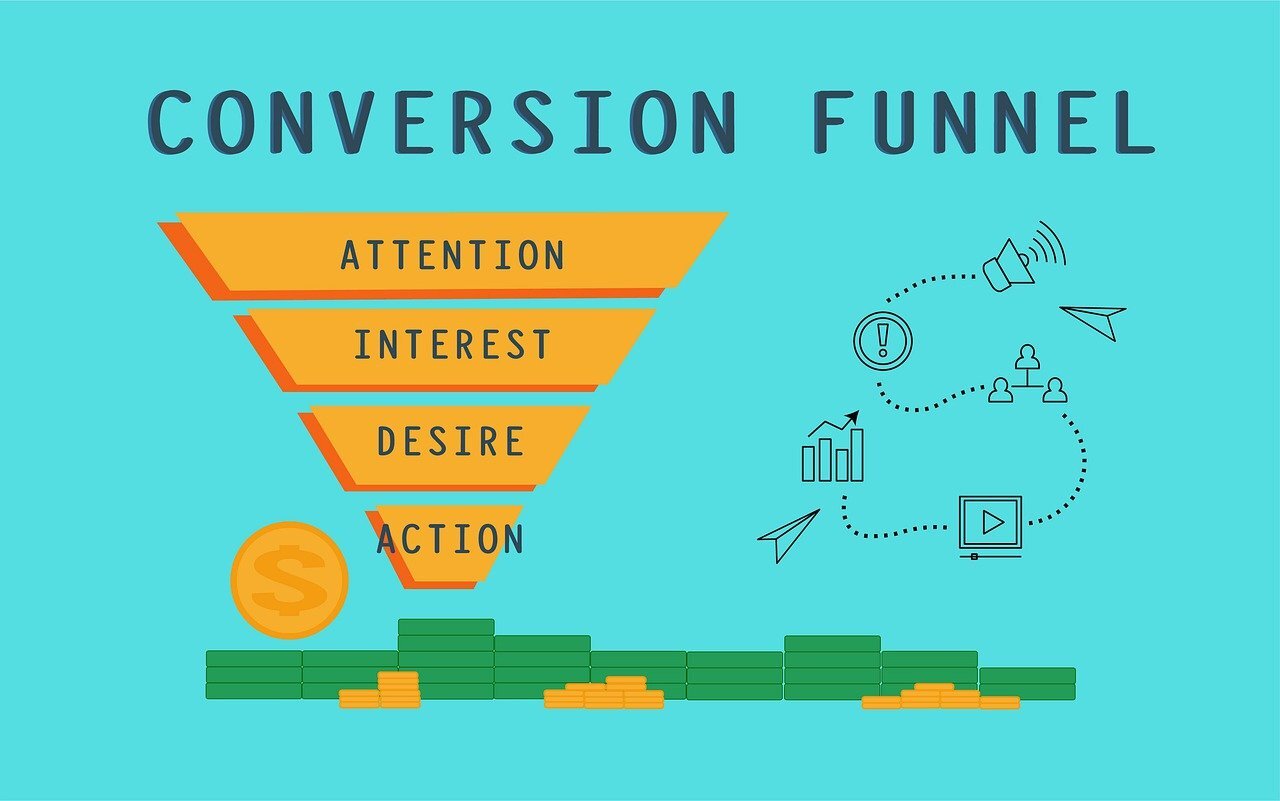
The reason behind this may have to do with where customers are at in the conversion funnel. For many basic searches, people are at the top of the sales funnel in the customer journey. They would probably get their information and go elsewhere, anyway.
With AI SEO, when users click through to your website, they often have intentions of doing something more. To get a better idea of what the sales looks like, I posted a photo of it below:
If you’d like to know about the difference between AI SEO and traditional SEO to better understand how to approach SEO in 2025, you may want to check out my article here, “AI vs Traditional SEO: Which Delivers Better Results in 2025?” You’ll learn everything you need to know about AI SEO versus traditional SEO and how the two are now intersecting.
#6 Future Trend: Zero Click Searches Will Grow
AI continues to shift how people find and use content. This means that someone will ask the question and receive the answer instantly right on the search engine page. This is known as a zero-click search because users have no reason to go above and beyond clicking into a website. Before, search engines worked as a third-party referring people to websites, but that has begun to change due to generative AI.
In the future, search will likely become a fully conversational interface. Again, the importance will grow for users to where they need to increase their online visibility, rather than simply getting clicks to their site.
They will want to get as high of a conversion rate as they can with the traffic they receive from search engines.
Now, you may be thinking clickless search is new, but in fact, the first clickless searches happened in the SERPs with Google back in 2001 with Google Images. What AI Mode and AI Overview are, however, is they are changing the fundamentals of how searches take place.
Websites that only produce informational content will be hit the hardest since these are the things that AI can do the best with.
Conclusion
Obviously, AI will only continue to grow in importance to the search engines, which means that you will want to pivot more into AI SEO to grow your brand’s search visibility. Understanding user intent is now more important than ever before, and this will likely only continue to grow in importance as context with keywords and personalization can be discerned better with AI.
If you’re not sure how to begin with AI SEO, try Firestarter AI SEO. I offer a few different AI SEO packages that you can choose from to start gaining visibility in the search engines.